Saturday, June 28, 2014

La Fièvre Hémorragique Ebola

One of the worst outbreaks of Ebola Hemorrhagic Fever (Ebola HF), a severe and often fatal disease in humans and other primates, is occurring in Guinea, Sierra Leone, and Liberia. Between the three, 338 fatal cases have occurred, with several more laboratory confirmation and reports in other districts.

Ebola Hemorrhagic Fever Distribution Map
Image Courtesy of CDC
Colorized Transmission Electron Micrograph
of Ebola Virus virion
Image courtesy of CDC
Ebola HF is a virus within the family Filoviridae, genus Ebolavirus. There are five subspecies of the Ebolavirus family, four of which cause disease in humans: Ebola virus (Zaire ebolavirus), Sudan virus (Sudan ebolavirus), Taï Forest Virus (Taï Forest ebolavirus, formerly, Côte d'Ivoire ebolavirus), and the Bundibugyo virus (Bundibugyo ebolavirus).

First discovered in the Democratic Republic of the Congo near the Ebola River in 1976, outbreaks have been sporadically occurring in endemic regions. The natural reservoir, or host, of ebolaviruses is still unknown, although native bats are strongly suspected due to the nature of similar viruses. Besides from the animal host, the virus can be transmitted between people by direct contact with the blood or secretions (i.e. urine, feces, saliva) of an infected person or exposure to contaminated objects. Those most often infected are families and friends that come in close contact while caring for the ill, or those in health care settings where appropriate protective equipment (masks, gloves, gowns, etc.) aren't worn and proper cleaning and disposal of medical instruments isn't performed.

Life Cycle of the Ebolavirus
Image courtesy of CDC
Symptoms of the virus may appear 2 to 21 days after exposure, although 8 to10 days is most common. Symptoms of those infected include fever, headache, joint and muscle aches, weakness, diarrhea, vomiting, stomach pain, and lack of appetite. Some may experience a rash, red eyes, hiccups, cough, sore throat, chest pain, difficulty breathing and swallowing, and bleeding inside and outside the body. The reasons behind why some get sick and are able to recover while others are not is not fully understood, although fatalities are usually in those who haven't developed a significant immune response to the virus at the time of death. Diagnosis of this disease is difficult because early symptoms of red eyes, skin rash, fever, and headache also occur in more common diseases, and treatment is supportive (balancing patients' fluids and electrolytes, maintaining oxygen status and blood pressure, and treating for any other complicating infections).

Ebola HF is unlikely to spread to nations outside of the African continent. The only reported instance of Ebola transmission in the US was Ebola-Reston virus (the fifth subspecies that doesn't cause disease in humans) from imported research monkeys in 1990, and it didn't result in clinically apparent disease.

Friday, June 20, 2014

California Cough

A new epidemic has been sweeping across the pacific coast, and it's not a new disease. More than 800 new cases of Bordetella pertussis, or "whooping cough" have been reported in the last two weeks, and as of June 10th, there have been 3458 cases of pertussis reported to California Department of Public Health in 2014, more than in all of 2013. (Source: CDPH)

Gram-stained photomicrograph of
Bordetella pertussis bacteria
Image courtesy of CDC
Bordetella pertussis is a respiratory illness that starts with cold-like symptoms including a runny nose and possible mild cough or fever. After 1-2 weeks, severe and distinct coughing fits develop and can last for more than 10 weeks, causing vomiting and fatigue.  In infants, the disease can manifest in apnea, or a pause in breathing pattern.  It's also particularly dangerous for babies, with about half of infected infants needing hospitalization. The pertussis bacterium attaches to small hair-like extnesions called celia which line the upper respiratory symptoms.  It releases toxins that damage the cilia and cause inflammation.  It is a very contagious human disease that is spread by droplet transmission.  No vaccine is 100% effective, so during community circulation the infected should be avoided.

The epidemic isn't all due to an anti-vaccination movement.  Pertussis is actually cyclical, with peaks every 3-5 years.  Over the past 20-30 years. peaks have been getting higher and overall case counts rising, due to a viaretiy of factors including increased awareness, improved diagnostic tests, better reporting, more circulation of hte bacteria, and waning immunity. Also, the vaccine used in the US, the acellular pertussis vaccine (DTaP), which has fewer possible side effects, does not protect as long as the whole cell vaccine (DTP).

Even though this epidemic is not directly caused by anti-vaccination tendencies, vaccines are absolutely critical not only to protect against several dangerous and potentially fatal diseases but to protect those that are unable to receive them, such as those that are allergic to components in the vaccine delivery system, the immunocompromised, infants below vaccination age, and the elderly whose vaccines may have worn off with time.

Tuesday, June 10, 2014

Oh Noro!

"Food poisoning." "Stomach flu." The go-to reason for calling in "sick". Unfortunately, there are those that really should call out of work that aren't. Norovirus is the #1 leading cause of disease outbreaks from contaminated food in the U.S., 70% of which is caused by infected food workers.

Not all food poisoning is caused by norovirus (other germs and chemicals share the honor), and it's not related to the Haemophilus influenza (the long name for the flu). It does cause the inflammation of the stomach and intestines (acute gastroenteritis), leading to stomach pain, nausea, non-bloody, watery diarrhea, and acute-onset vomiting lasting for 24-72 hours. Some people present with a low-grade fever, headaches, and myalgias (body aches), and dehydration is the most common complication. It can be caught again and again, and can be serious for young children and older adults.

Transmission electron micrograph of norovirus virions
Image courtesy of CDC
Noroviruses, previously called Norwalk-like viruses, are a group of non-enveloped, single-stranded RNA viruses of the family Calciviridae. Three of the six currently recognized norovirus genogroups, GI, GII, and GIV, infect humans. The most common type causing infection since 2002 is the variants of the GII.4 genotype. The virus is shed through feces once symptoms begin, and continue to do so for 2 weeks or more after recovery (although this does not necessary mean they are contagious).


Norovirus can be spread by contact with an infected person, touching contaminated surfaces, or eating or drinking contaminated foods or water. It has a tendency to spread quickly in closed places like daycare centers, nursing homes, schools, and cruise ships. It is a hardy virus, able to stay on food at freezing temperatures and on kitchen surfaces and utensils for up to two weeks.  It's also resistant to many common disinfectants and hand sanitizers, and only requires 18 viral particles to make you sick.


There is currently no medicine that can treat norovirus, but is manageable with plenty of liquids (not cafffinated or alcoholic beverages) to replace fluid lost from vomiting and diarrhea.  It is preventable through sanitation techniques for both the general public and food service employees, outlined in the infographic below.


Wednesday, June 4, 2014

To and Fro and In-between (or Ew! I don't want to touch it!)

This is the second installment of the series "To and Fro and In-between" covering getting sick while traveling in an airplane.  Last week's installment was getting sick through breathing the same air as that coughing passenger.  This week is about what you can catch through touch, or direct contact transmission.

Kiril Vaglenov of Auburn University recently presented to the the American Society of Microbiology his research regarding the lifespan of certain bacteria on airplane cabin surfaces.  He and his colleagues tested the ability of two pathogens, MRSA (methicillin-resistant Staphylococcus aureus) and E. coli 0157:H7 (Escherichia coli) on common surfaces in airplanes.  Materials for the armrest, plastic tray table, metal toilet button, window shades, seat pocket cloth, and leather were inoculated with the bacteria and exposed to typical airline conditions.  MRSA lasted 168 hours on the seat-back pocket while E. coli O157:H7 survived 96 hours on the armrest material.  Current cleaning practices of aircraft according to the World Health Organization include cleaning the aircraft interior as time permits, with priority given to litter and dry waste removal and cleaning of the toilet compartments and galleys.

E. coli O157:H7
Image courtesy of CDC
E. coli is a large and diverse group of bacteria.  Most strains are harmless, and some even live in human and animal intestinal tracts.  However, the O157:H7 strain is considered pathogenic because it produces a toxin called Shiga, causing stomach cramps diarrhea that is often bloody, vomiting, and possible low grade fever.  It is transmitted through contaminated water or food, and is the strand that is most common in North America during E. coli "outbreaks" of infections.


MRSA bacteria
Image courtesy of CDC
MRSA stands for methicillin resistant Staphyloccous aureus, a type of staph bacteria that is resistant to several antibiotics.  MRSA can cause skin and other infections, as well as severe problems in healthcare settings such as bloodstream infections, pneumonia, and surgical site infections.  It is spread though direct contact with an infected wound or sharing personal items that have touched skin.  Infection risk can be increased by certain activities or places that include crowding, skin-to-skin contact, and shared equipment or supplies. Symptoms begin as a bump or infect area that might be red, swollen, painful, warm to the touch, full of pus or other drainage, and may be accompanied by a fever.  Two in every 100 people are MRSA colonizers, meaning they carry it as part of their natural bacteria.

Further research into direct contact transmission on airplanes is going to involve testing other human pathogens including those that cause tuberculosis, as well as exploration of effective cleaning and disinfection strategies.  Different surfaces that have antimicrobial properties will be tested to see if they will reduce the persistence of pathogenic bacteria in the cabin.

Until more is known about what can spread by just touching the armrest, avoid touching your face during the flight and wash your hands before eating (and don't eat the food that fell on the tray table).

Source: American Society for Microbiology

Thursday, May 29, 2014

To and Fro and In-between (or Help! I'm afraid to breathe!)

Besides diseases in other countries, every traveler has another fear-being trapped in an aircraft cabin for several hours with the passenger that can't stop coughing. Every year over 1 billion people travel by commercial airways from all over the world, and this number is expected to double over the next 20 years.  But how likely are you to get sick from that passenger who didn't change their flight (or at least their seat next to you)?

Droplet transmission.
Image courtesy of the CDC.
The answer is a complex one because there are multiple ways to get infected. One method of infection (and the one everyone worries about on flights) is droplet or airborne transmission.  This occurs by inhaling small particles containing infectious agents that remain infective over time and distance. 

Surprisingly, the risk of infection on an airplane via this route is lower than you might think.  All commercial aircrafts (and a few modified older planes) recirculate 10-50% of the air in the cabin and mix in the air from outside.  The recirculated air passes through a series of filters 20-30 times per hour.  In newer-model airplanes, high-efficiency particulate air (HEPA) filters capture 99.9% of particles 0.1-0.3 um in diameter.  Also, the air isn't forced up and down the length of the airplane, but rather flows transversely across the plane in limited bands (saving you from that coughing passenger several rows ahead).  

Seating diagram for passengers
exposed to measles, rubella, or TB.
Image courtesy of the CDC.
If the sick passenger is sitting next to you, the risk is about the same as sitting next to any other ill person (the odds of infection
change depending on what is making the person sick).  The good news is that there is protocol in place should the disease they carry be of public health concern.   Flight contact investigations are performed for infectious tuberculosis (TB), measles, rubella (German measles), pertussis (whooping cough), and meningococcal disease (meningitis).  CDC protocols are in place to identify passengers who may have been exposed.  Exposed passengers will be contacted by their state and local health departments or ministries of health to inform them about their exposure and what to do.

So take a deep breath, relax, and enjoy the flight (and try not to think to hard about what you might be touching...)


Friday, May 23, 2014

Dengue World Cup

Endemic Regions of Dengue Fever  
Image courtesy of the CDC
Dengue fever infects approximately 400 million people annually and is a leading cause of illness and death in the tropics and subtropics.  It was first documented in the 1950s in
Aedes aegypti mosquito, a dengue virus vector.
Image courtesy of the CDC
the Philippines and Thailand and remained there until 1981, when large numbers of Dengue Hemorrhagic Fever were reported in the Caribbean and Latin America, including Puerto Rico, the U.S. Virgin Islands, U.S.-affiliated Pacific Islands and the British Virgin Islands. 
Yet only recently has it begun making headlines, thanks to the 2014 FIFA World Cup in Brazil.  

Dengue fever has 4 virus types (DENV 1, 2, 3, and 4) and is spread by the Aedes mosquito in high population areas when rainfall is optimal for breeding.  It is a bloodborne virus, so transmission can also occur through exposure to infected blood, organs, and tissues, as well as through vertical transmission (mother-to-neonate).  Dengue hemorrhagic fever is a more severe form of dengue fever, and risk factors include having a previous infection, being younger than 12, female, or Caucasian. 

Dengue fever may cause high fever, severe headache, eye pain, joint pain, muscle and/or bone pain, rash, mild bleeding in the nose or gums, petechiae, easy bruising and/or a low white blood cell count.  Warning signs to watch for 3-7 days after fever temperature declines include severe abdominal pain or persistent vomiting, red spots or patches on the skin, bleeding from the nose or gums, vomiting blood, black stools, drowsiness or irritability, pale, cold, clammy skin, or difficulty breathing.  The signs and symptoms of DHF are consistent with dengue fever, including the fever decline.  In DHF, this decline marks the beginning of a 24-48 hour period where capillaries become excessively permeable, causing ascites and pleural effusions.  Without prompt, appropriate treatment, symptoms can progress to circulatory system failure and shock, and possibly death.

Currently, there is no vaccination or specific medication for treatment of dengue fever or dengue hemorrhagic fever.  Symptoms are manageable with analgesic pain relievers (ex. acetaminophen and paracetamol), rest, plenty of fluids to prevent dehydration, and consulting a physician.  DHF can be effectively treated with fluid replacement therapy with an early clinical diagnosis (this generally requires hospitalization).

There is good news on the horizon.  Sanofi Pasteur, a multinational pharmaceutical company, is
in Phase 3 clinical trials of the CYD dengue vaccine. The purpose of the study is to assess the efficacy of the CYD dengue vaccine after 3 vaccinations at 0, 6, and 12 months in preventing symptomatic virologically-confirmed dnegue cases, regardless of the severity, due to any of the four virus types in children aged 2 to 14 years.  It is difficult to determine at this time when this vaccine would be available to the public.  For more information, please visit www.clinicaltrials.gov 

Prevention

To prevent dengue fever when present in endemic regions, eliminate containers that hold water in and around the home to prevent breeding. Wear mosquito repellent indoors and outside (the higher the DEET content, the better) at all times and long sleeves and pants.  Windows and door screens should be secure and without holes, and use air conditioning where possible.

For a more technical review: Dengue Detection

Monday, May 12, 2014

A New Respiratory Tract Infection

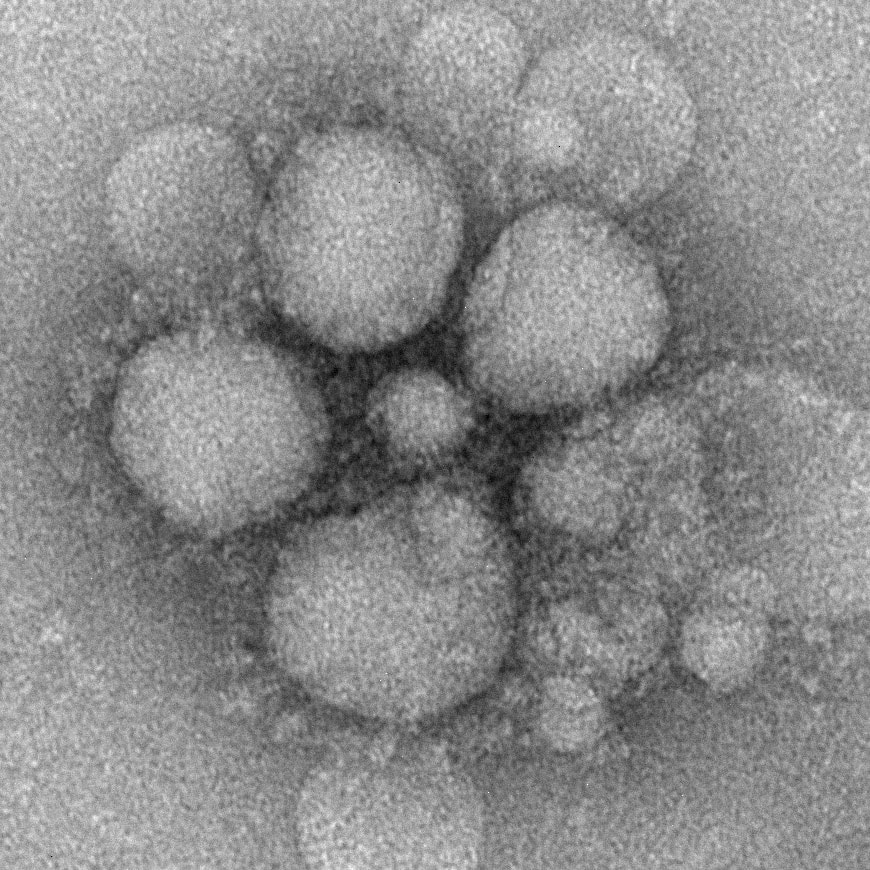
MERS-CoV particles under negative stain electron microscopy
Virions contain club-like projections emanating from
 membrane. Image courtesy of CDC

    
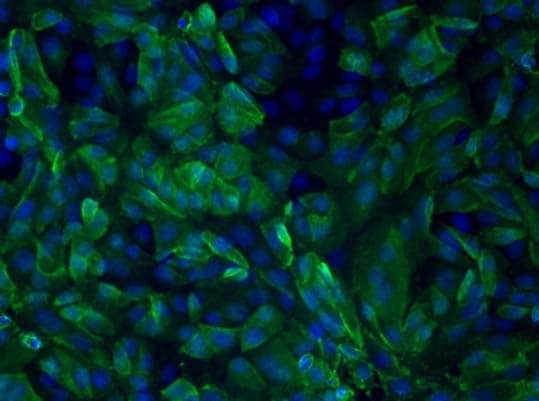
Human serum antibodies react with MERS infected  Vero cells,
indicating infection.  Image courtesy of CDC
There's a new kid on the block among respiratory tract infections, and it goes by MERS, or Middle East Respiratory Syndrome, first confirmed in Saudi Arabia in 2012.  Symptoms of infection include fever, cough, and shortness of breath, all signs of severe acute respiratory illness.  Its mortality rate is greater than 30% for those infected. 

This syndrome is caused by a coronavirus called MERS-CoV.  Coronaviruses, named for their crown-like morphology.  They are common viruses and usually cause mild to moderate upper-respiratory tract infections. There are three main subgroups and a recently-assigned new sub group, alpha, beta, gamma, and delta, respectively. 

 The ones that affect humans are alpha 229E and NL63, and beta OC473, HKU1, and SARS-CoV (responsible for severe acute respiratory syndrome prior to 2004).  Typical symptoms of non-SARS coronaviruses are coughing, runny nose, sore throat, and fever.  It may also cause lower-respiratory tract infections in the elderly and immunocompromised

Why is this virus important? Because like SARS, it has left its origin country and infected two U.S. patients that had traveled to Saudi Arabia--one on May 2nd, 2014 and a second one May 11th, 2014.  The first patient has made a full recovery and the second is currently hospitalized but recovering. Don’t panic--at this time there is a low risk to the general American public at this time and those that had contact with the two infected are being contacted.  

For more information, please visit: CDC.gov

For a more technical review of this topic: MERS-CoV Interim Guidelines

Update 5/15/15: healthcare workers exposed to the MERS patients have been sent home for 14 days after two showed flu-like symptoms. Neither are confirmed MERS patients as of now. 

Resource: CNN.com